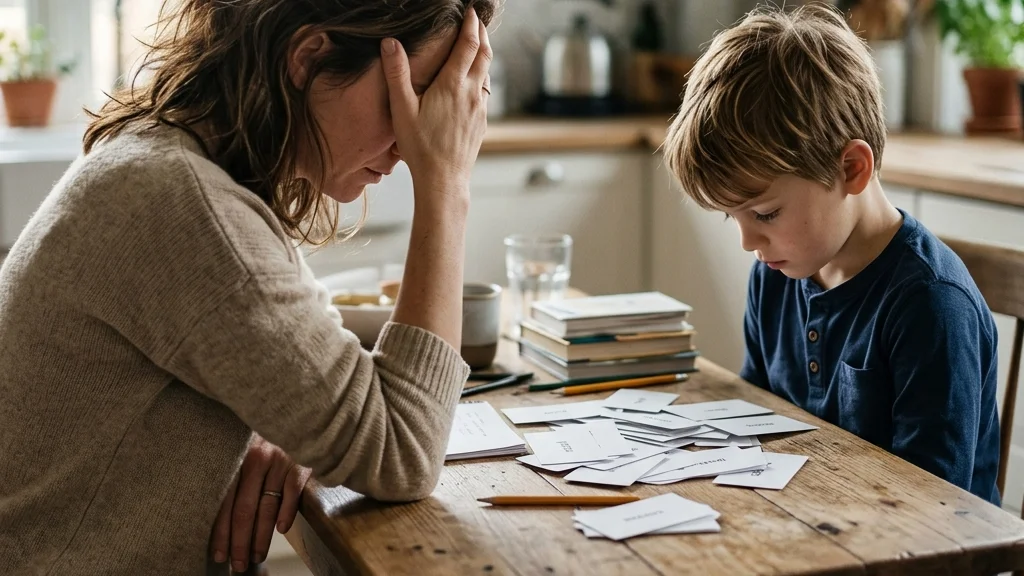
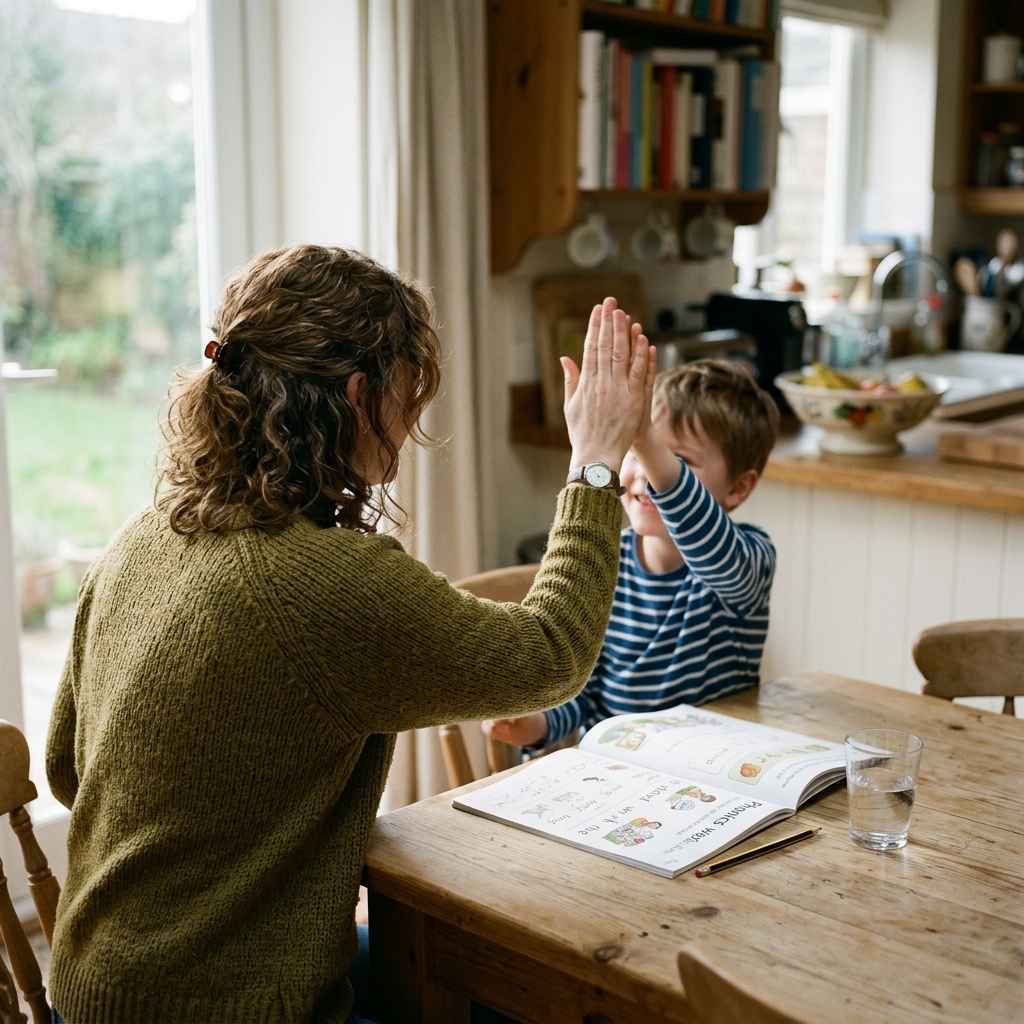
If you've watched your kindergartener, first grader, or second grader sit with a book and felt that quiet panic in your stomach — "why isn't this clicking yet?" — you are not paranoid. And you are not alone.
In 2024, only 31% of U.S. fourth graders read at a proficient level on the National Assessment of Educational Progress — the lowest score in over two decades. Two-thirds of American fourth graders are not reading on grade level. And the children on the wrong side of that line are four times more likely to drop out of high school before they ever earn a diploma.
But almost no parent is being told the part that actually matters:
Your child is most likely not "behind" because they're slow. They're behind because they need a different kind of practice — one that's hard to fit into an already packed school day.
For the last 30 years, most U.S. elementary schools have used a method called three-cueing — also known as "balanced literacy" or "whole language." Instead of teaching kids to decode letters into sounds, it teaches them to guess using pictures, the first letter of a word, and the shape of the sentence.
Reading science has evolved — and many states are updating their curriculum standards as a result. Teachers are working hard within systems that are still catching up to the latest research. Functional MRI studies confirm that explicit phonics instruction matches how the brain actually learns to read, and that gap between the science and the classroom is real. Home practice can help bridge it.
Watch your child read tonight. If they do any of these 3 things, they are not actually reading — they are guessing.
When a child gets stuck on a word, the way they react tells you everything. If you see any of the following, your child has learned to fake-read:
Why this matters specifically for your child: Pictures disappear from books around the end of first grade. By second grade, the guessing tricks stop working — and a previously confident child suddenly hits a wall. They start saying things like "I'm just stupid." The neurological research is unambiguous: every week a child spends guessing actively reinforces the wrong reading pathways in their developing brain. The reading gap doesn't shrink with time. It doubles by the end of second grade.
The window to break the habit is right now.
⚠ The hard data: Children who are not reading proficiently by the end of 3rd grade are 4× more likely to leave high school without a diploma (Annie E. Casey Foundation, longitudinal study of ~4,000 students).
"Mommy, I'm just stupid." — One mother's breaking point.
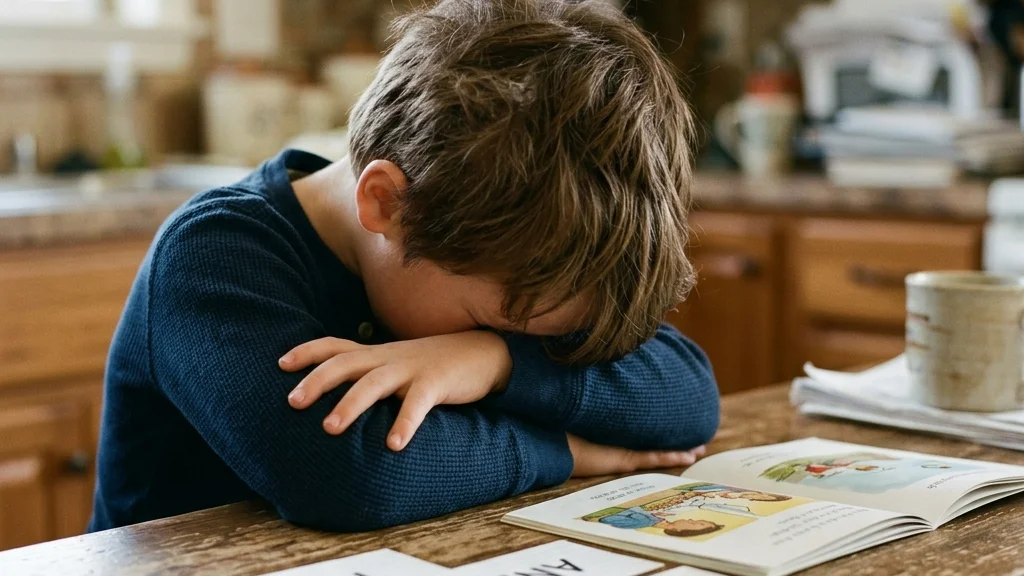
To understand how the school's method affects a child's confidence, we spoke with Sarah, a 34-year-old mother of two. Her son Leo is a bright, energetic kindergartener who suddenly began dissolving into tears the moment a book hit the kitchen table.
"His teacher pulled me aside and said he was falling behind. She flagged it early and sent home materials to help — she genuinely cared. But Leo needed more repetition than any teacher can realistically give thirty kids. The flashcards weren't landing for him," Sarah told us.
"It wasn't working. He'd just guess based on the first letter or the shape of the word. When I corrected him, he'd get furious. One night he slammed his hands on the table and shouted 'Mommy, I'm just stupid!' — that broke me."
Sarah's situation is not rare. It is the predictable, repeated outcome of a curriculum that skips the foundational building block of true reading: phonics — the actual relationship between letters and sounds.
So Sarah did what most parents in her position do. She started searching for help. The first thing she found was the local private tutor — $50 to $75 an hour, $200 to $300 a month, and the next available slot was three weeks out.
That's when a friend sent her a link to something different.
The Mechanism: How "True Phonics" Rewires The Way A Child Reads
Unlike sight-word memorization or guessing from pictures, true phonics teaches the brain to decode — to break a word down into its actual sounds and reassemble it. Once a child has the decoding key, they can read any word in the English language, including ones they have never seen before.
The Hooked on Phonics App is built on this exact science. Here is what makes it different from every reading app, flashcard, and tutor your child has tried:
Step 1 — Learn the sound. A 90-second high-energy music video introduces a single phonics rule (for example, the sound "sh"). Just one. Your child sees it, hears it, and watches a mouth on screen forming it.
Step 2 — Practice the sound in a game. Immediately after the video, an interactive game gives your child five to seven repetitions of that exact sound — embedded in the same dopamine-loop reward system that makes video games so hard to put down.
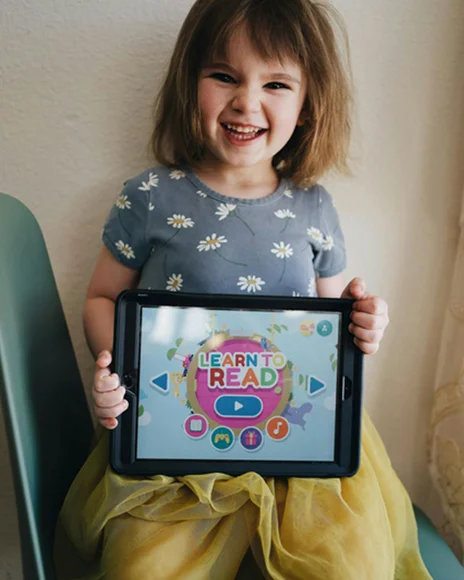
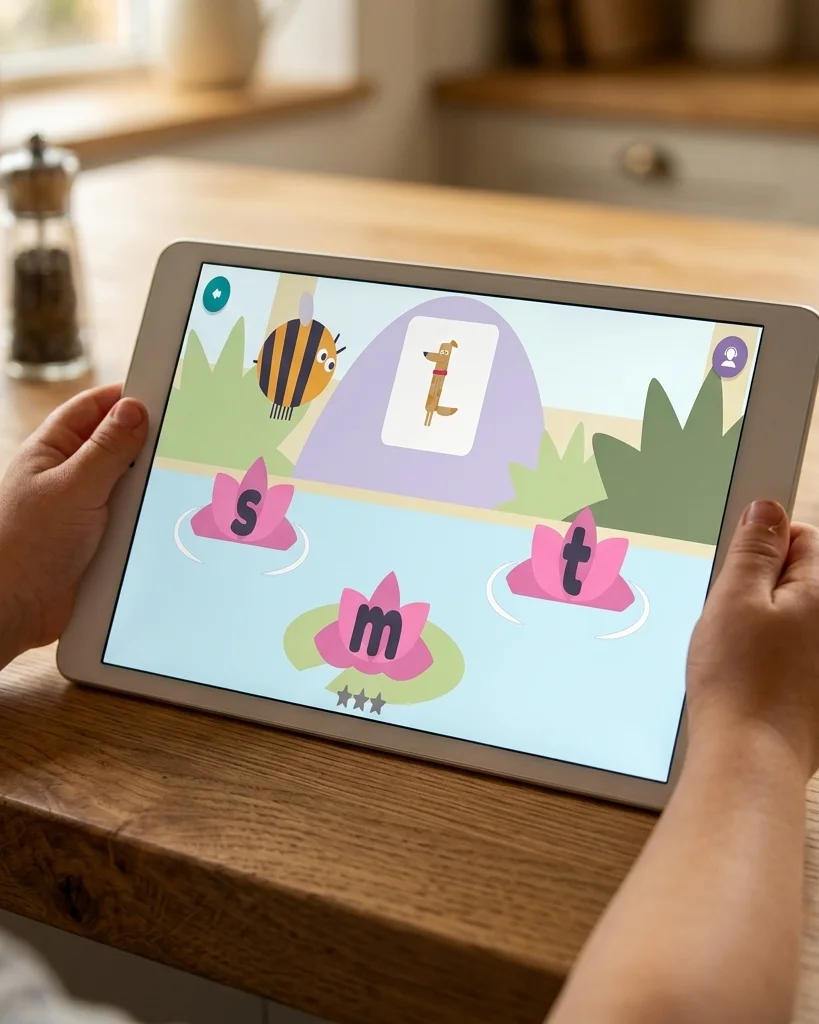
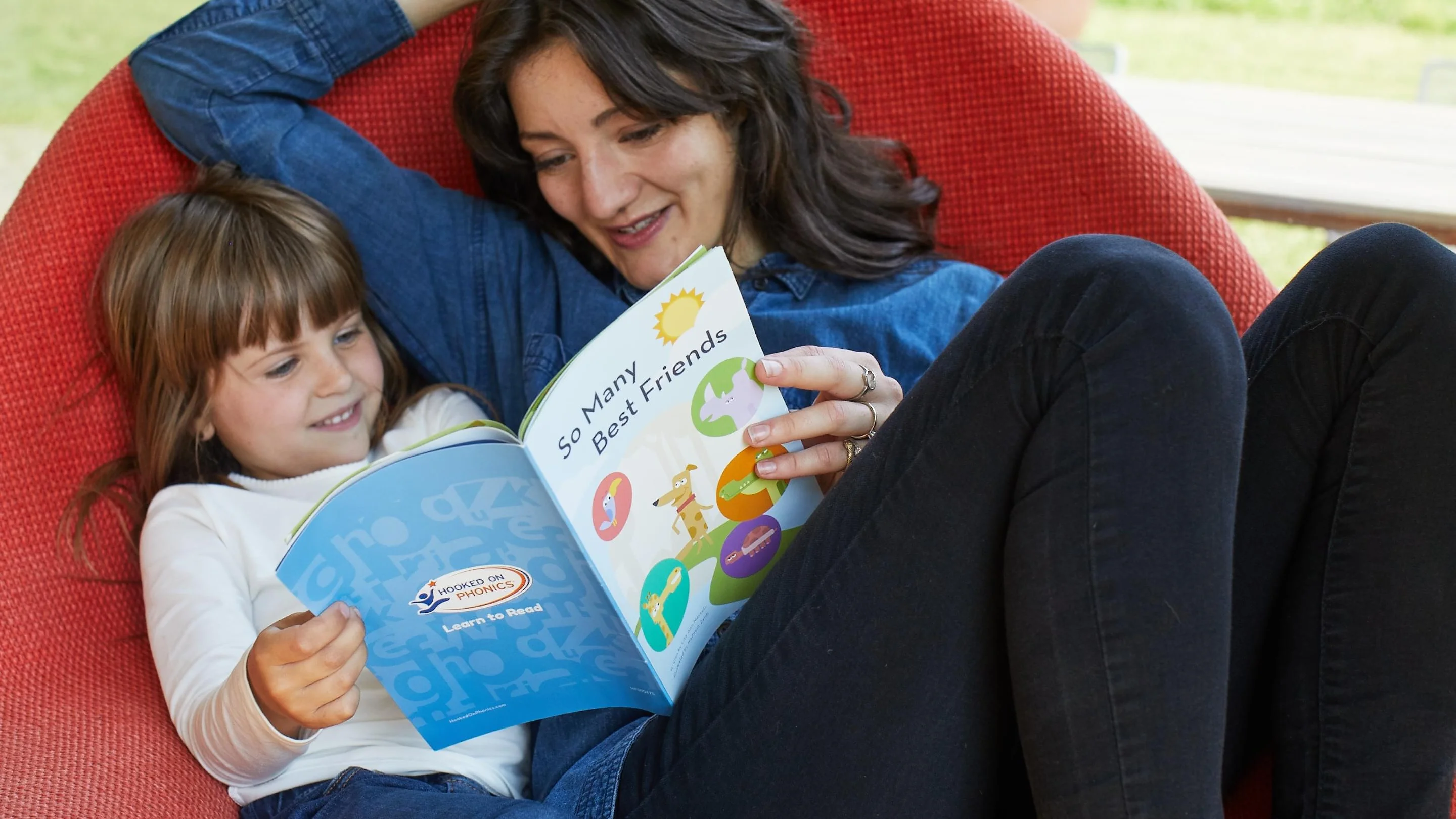
Step 3 — Read the sound in a real book. A digital storybook then gives your child a story written using only the phonics rules they have already learned. No surprise words. No reason to guess. Every page is a confidence win they earned.
Step 4 — Prove it offline. A physical Practice Pack — a real storybook, a tracing workbook, milestone stickers — arrives in your mailbox every month, calibrated to the exact rules your child just unlocked in the app. They master it digitally and prove it to themselves at the kitchen table.
The whole sequence is locked at 15 minutes a day. Not because that is a marketing number — because attention-span research shows that is the limit before a young child's prefrontal cortex disengages. Past 15 minutes, you are no longer teaching them to read. You are teaching them to hate reading.
This is why parents see the click happen in two to four weeks. Not three months. Not three years. Weeks.
Sarah's payoff came six weeks later.
"Leo walked into the kitchen, handed me a brand-new book, and said, 'Mom, listen to this.' He sat down and read three full pages out loud — without a single guess, stutter, or tear. I started crying right there at the stove. The kitchen table isn't a battleground anymore. It's just where we read together."
"I'm so amazed with this program. My son has become so confident with reading. This program is seriously phenomenal — we use it every day for homeschooling."
— Becca L., Verified Buyer
How The 15-Minute Method Stacks Up
Most parents assume the only way to catch their child up is to hire an expensive private tutor or spend hours drilling flashcards at the kitchen table. But new data shows that short, gamified phonics bursts are actually significantly more effective at retaining a child's attention.
| Feature | Hooked on Phonics | Private Tutors | Homework Drills Alone |
|---|---|---|---|
| Cost | Under $25/Month | $200+ / Month | "Free" |
| Time Required | 15 Min / Day | 2-3 Hours / Week | Endless Nightly Drills |
| Child's Reaction | Excited / Feels like playing | Resistant / Bored | Varies / Hard to sustain |
| Teaching Method | True Phonics (Decoding) | Mixed Methods | Repetition without decoding support |
Digital Mastery. Physical Proof.
While the app does the cognitive heavy lifting, the real magic of the system happens when reading crosses from the screen into the real world. That is why your subscription doesn't stop at software.
When you start your $1 trial today, you also unlock Physical Practice Packs, mailed directly to your door every single month:
- Real Storybooks — written to include only the phonics rules your child just conquered. Zero guessing required.
- Hands-On Workbooks — tracing and writing activities that solidify the mind-to-hand connection neuroscience says locks the skill in long-term.
- Celebration Stickers — physical milestone rewards that turn reading progress into something your child can hold and show off.
Master it digitally. Prove it physically. That is the multiplier the school's flashcards will never give them.
What To Expect In The First 30 Days
Phase 1
Week 1: Breaking the guessing habit.Your child engages with the first phonics videos. They stop hunting for picture clues and start recognizing that letters make sounds.
Phase 2
Weeks 2–3: Sounds start blending.The click happens. Your child connects individual sounds into full words without hesitation. You'll see confidence return at homework.
Phase 3
Week 4 and beyond: True reading independence.Your child reads their first complete digital storybook, end to end, by decoding. The kitchen table nightmare is over.
Trusted By 5+ Million Parents
More than 5,000,000 families and thousands of schools have used Hooked on Phonics over the past 30 years to help their children reach their full potential.
"My son was reading just one month after starting this program. Last year he skipped kindergarten and was in first grade by October. Now he's thriving in second grade!"
— Naema S., Verified Buyer
The Cost of Waiting Is Not Zero
Every parent in your position has a window — and the window is shorter than most realize.
By the end of third grade, schools stop teaching kids to read and start expecting kids to read in order to learn. Science, history, math word problems — all of it assumes a child can decode fluently. A child who can't decode at that point doesn't just fall further behind in reading. They fall behind in every subject. That is what the Annie E. Casey Foundation's longitudinal study on nearly 4,000 students found: children not reading proficiently by the end of third grade are four times more likely to drop out of high school.
If your child is in Pre-K, kindergarten, or first grade right now, the foundation is being poured this year. If they are already in second grade and the school's sight-word program isn't clicking, the patch can still happen — but every additional month of guessing makes the rebuild harder, not easier.
Teachers carry classrooms of 20 to 30 kids — they can't always give every child the one-on-one repetition that builds reading fluency. That's not a failure on their part; it's the reality of the classroom. Schools and parents work best as a team, and 15 minutes of focused phonics practice at home is one of the most powerful things you can add to that partnership.
The good news: the rebuild does not take a tutor, a teaching certificate, or hours of your evening. It takes 15 minutes a day, a phone, and a system designed by reading scientists who already know what to do.
And if your child is in preschool or Pre-K, the best time to start is right now — not because they're behind, but because early phonics practice is also your earliest window into how your child learns. Children who go on to need extra support — whether for dyslexia, auditory processing, or other learning differences — are far better served when those patterns are identified at 4 or 5 than at 7 or 8. Starting early doesn't create pressure. It creates clarity.
Supercharge Your Child's Reading Skills
Get full access to the Hooked on Phonics App and physical practice packs for your first month for only $1.00.
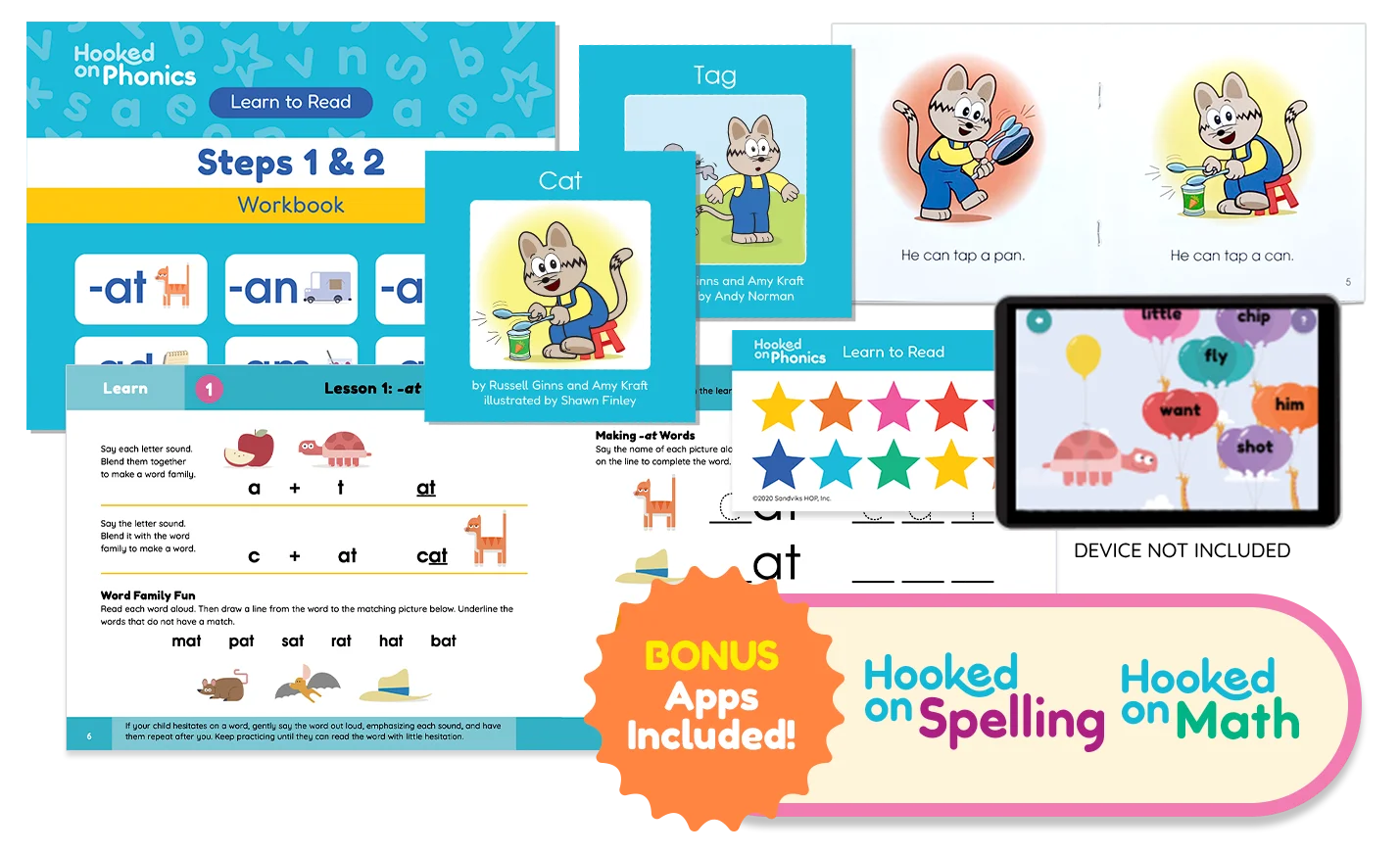
First Delivery Includes:
- ✓ Full App Access
- ✓ Workbook
- ✓ 2-3 Story Books
- ✓ Celebration Stickers
- ✓ Hooked on Math (FREE)
- ✓ Hooked on Spelling (FREE)
- ✓ Cancel Anytime
Frequently Asked Questions
The platform is designed specifically for children ages 3 to 8. This covers toddlers in Pre-K just starting to learn their alphabet, all the way through 1st and 2nd graders who are currently struggling with sight-word curriculums at school.
While free apps are great for a quick distraction, they typically only target one or two isolated phonics skills. Hooked on Phonics is a fully comprehensive, step-by-step reading curriculum designed by educators to take your child through every single stage of reading.
Absolutely. A massive portion of parents use Hooked on Phonics as their core reading curriculum because it perfectly bridges digital gamification with physical, hands-on learning through the mailed workbooks and storybooks.
Yes. The Hooked on Phonics App is fully kidSAFE certified. There are absolutely zero ads, no pop-ups, and no external links, completely protecting your child's digital environment.